

Three key factors for the autumn for sales managers
The calendar turned to September. The colours of autumn are beginning to show, the light is fading and the countryside is busy harvesting. Also in sales management Autumn is a busy time, when on the one hand you have to harvest the year's harvest, i.e. get your goals together, and on the other hand the next year's sowing, i.e. budgeting and planning, and in the middle of all this you shouldn't burn yourself out. That's why we'd like to share with you three key things to keep in mind during the autumn for sales managers.
What is it about?
It's about leading people and leading things, or what is known as leadership. To achieve results, you can't just lead by doing or by atmosphere, you have to focus on both and create a shared, inspiring goal that the team really wants to move towards.
Today, we'll focus on management and leadership, because creating a shared, inspiring purpose could be a blog in itself. Often, a shared inspirational purpose is created by reflecting together with a team.
One good example of a shared inspirational goal is to work together to Mäkelä Alu”Together for the Best of the Planet” - you can read about it here.
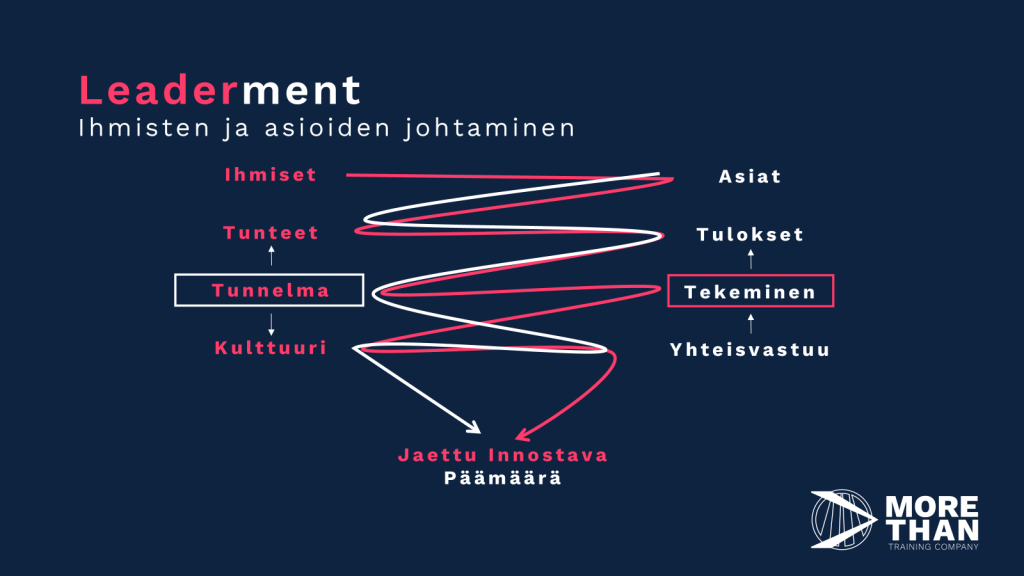
Key factor 1: Know and understand - Management
What does it mean to lead with data in sales? Well, certainly a bit different things depending on the industry, but the basic idea is the same everywhere.
Let's first consider maximising sales for the rest of the year towards achieving our targets. As a sales manager, you need to know the status of your project portfolio:
- Are projects being completed and won, and by how much?
- Which projects are the ones you can help win and which of your vendors own those projects?
Analysing the data will help you understand the situation and come up with an action plan to get the sales momentum going.
Negotiating next year's goals will also be easier if you have the basics well in hand:
- What are your likely sales and margins this year?
- What is the structure of sales in relation to the portfolio and in relation to customers?
- What products and competences did you sell well this year and what did you sell poorly because of a lack of them?
Top business and finance management sets targets, driven by strategy and Excel exercises. You need to be able to analyse what these targets mean in practical sales terms.
- Are the product range and competences sufficiently strong in relation to the objectives?
- What is the baseline sales you can achieve with good basic chemistry with existing customers and product categories?
- And what is the gap between this standard sales and the target that needs to be filled to achieve the growth targets.
- What inputs do you think are needed to fill the gap and what are the dependencies between achievements and inputs?
You don't have to thwart your growth objectives. Instead, you can propose inputs and measures to help achieve the growth targets.
Key factor 2: Lead and influence - Leadership
Transparency builds trust. As a sales manager, telling sales about your situation openly but analytically, building trust, is what gets people thinking and acting. Paint the finish line sign - that famous shared inspirational goal - clearly and point the way, and salespeople will run the most direct route through the checkpoints to the finish line.
Coaching leadership means listening to and helping your people to solve challenges themselves. Those closest to the customer will know the best tricks for boosting sales. You know who and what projects or accounts you need to spar with in particular. Micromanagement dampens the mood, but taking an interest in how things are going and offering to help is not micromanagement, it's a show of trust and appreciation.
Next year's targets, and in particular the conditions that are a prerequisite for achieving the growth targets, can also be influenced. Use your knowledge and understanding of the situation to constructively propose investments and new ways of working that you believe will help you achieve your goals. In this way, you will be actively involved in building a transparent picture of the situation and managing future growth.
Key factor 3: Take care of yourself
The autumn sales rush is bound to take its toll, and as the year draws to a close, most organisations will be starting a new financial year and starting from scratch again to get their goals together. If your machine breaks down, it's easy to break down the bigger machine. But if you invest in your people, exercise and rest, you'll get through the busy autumn and long winter with a smile on your face, and your good energy will spread to the whole team.
So don't forget to take care of yourself. If necessary, make time for a chaperone or even an outsider to help you with these topics, so that you're on top of your game throughout the autumn and into the coming spring.
Good luck and good luck for the autumn!